
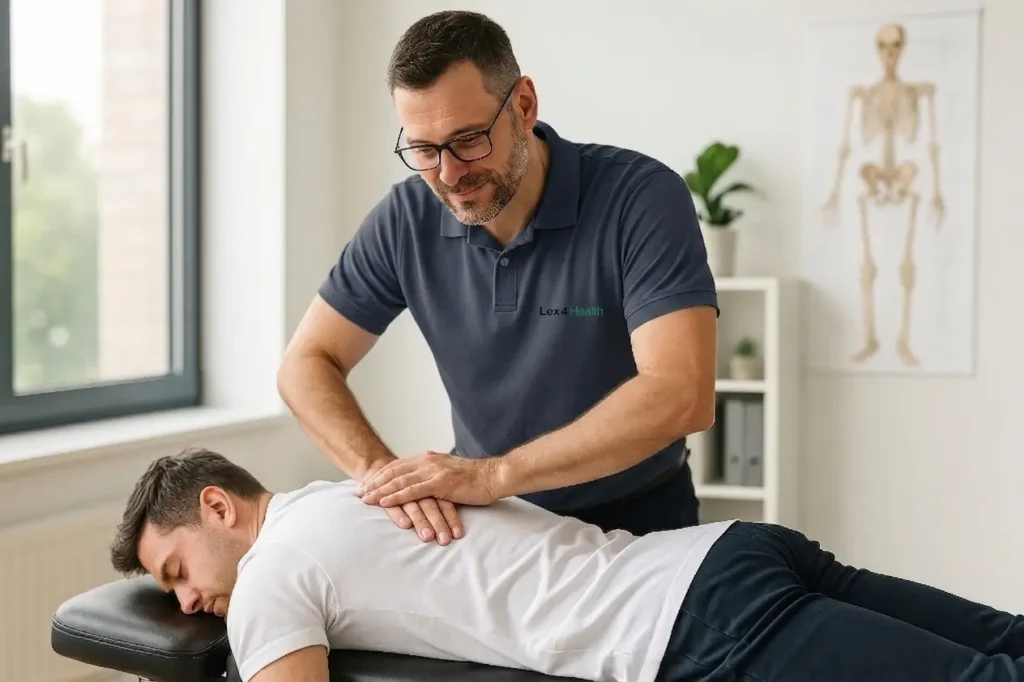
Understanding how your spine moves, supports, and adapts is key to addressing long-term pain. At its core, spinal biomechanics pain is not just about discomfort, it’s about how structural and functional issues disrupt the body’s natural movement patterns.
If you’ve ever dealt with persistent back or neck pain, chances are your body’s mechanics are not working the way they should. A skilled chiropractor chicago, can help identify these dysfunctions and guide recovery through targeted, evidence-based care.
Key Takeaways
- Spinal biomechanics refers to how the spine moves, stabilizes, and absorbs forces
- Dysfunction in spinal mechanics is a major contributor to chronic musculoskeletal pain
- Poor posture and repetitive strain can lead to vertebral misalignment and altered movement patterns
- Chronic pain often involves both mechanical and neurological components
- Evidence-based chiropractic care focuses on restoring function, not just relieving symptoms
Understanding Spinal Biomechanics and Pain
Spinal biomechanics is the study of how the spine functions during movement and at rest. It includes joint motion, muscle coordination, load distribution, and nervous system interaction.
When everything is working smoothly, your spine distributes forces evenly, maintains stability, and allows efficient movement. But when something goes off track, things can spiral, quite literally.
The Role of Structure and Function
The spine is made up of vertebrae, discs, ligaments, and muscles that work together as a dynamic system. Any disruption in one part can affect the entire chain.
Common contributors to dysfunction include:
- Poor posture habits
- Sedentary lifestyle
- Repetitive movements or overuse
- Injury or trauma
- Degenerative changes
These factors can lead to vertebral alignment dysfunction, which alters how forces are transmitted through the spine.
How Spinal Dysfunction Leads to Chronic Pain
Pain doesn’t just appear out of nowhere. In most chronic cases, it develops over time due to ongoing mechanical stress and compensation patterns.
The Chronic Back Pain Mechanism
Chronic pain often follows a predictable pattern:
1. Initial dysfunction
A joint restriction, muscle imbalance, or disc irritation begins the process
2. Compensation
The body adapts by shifting movement patterns to avoid discomfort
3. Overload
Other tissues take on more stress than they’re designed for
4.Sensitization
The nervous system becomes more reactive, amplifying pain signals
This cycle explains why pain can persist even after the original issue seems minor.
Neuromuscular Control and Pain
Biomechanics is not just structural, it’s neurological too. The brain constantly communicates with muscles and joints to coordinate movement.
When spinal dysfunction occurs:
- Muscle activation patterns become inefficient
- Stability decreases
- Movement becomes less coordinated
- Pain signals increase
Over time, this creates a feedback loop where poor movement reinforces pain, and pain reinforces poor movement.

Posture, Movement, and Spinal Stress
Posture Biomechanics Spine Connection
Posture plays a huge role in spinal health. Slouched sitting, forward head posture, and uneven weight distribution can all contribute to dysfunction.
Here’s the thing, posture is not about being perfectly straight all the time. It’s about variability and control.
Poor posture can:
- Increase disc pressure
- Strain ligaments and muscles
- Reduce joint mobility
- Alter breathing mechanics
Movement Patterns Matter More Than You Think
Even if your posture looks fine, poor movement patterns can still cause problems.
Examples include:
- Improper lifting techniques
- Limited hip mobility leading to spinal compensation
- Asymmetrical movement during exercise
These subtle issues can gradually lead to spinal biomechanics pain and long-term dysfunction.
Evidence-Based Chiropractic Perspective
Modern chiropractic care focuses on restoring normal biomechanics rather than just “cracking joints.”
What the Research Suggests
Clinical guidelines indicate that manual therapy, combined with exercise and education, can improve outcomes in chronic musculoskeletal pain.
Evidence-based approaches include:
- Spinal manipulation for improving joint mobility
- Soft tissue therapy to address muscle imbalances
- Corrective exercises for long-term stability
- Movement retraining to fix faulty patterns
Limitations and Considerations
Chiropractic care is not a one-size-fits-all solution. It may not be appropriate in cases such as:
- Severe spinal instability
- Fractures or infections
- Advanced neurological conditions
A proper assessment is essential before starting any treatment plan.
Preventing and Managing Spinal Dysfunction
The good news is, many biomechanical issues are manageable and even reversible with the right approach.
Practical Strategies
- Stay active and avoid prolonged sitting
- Strengthen core and stabilizing muscles
- Practice proper lifting and movement techniques
- Take regular movement breaks during work
- Address minor pain early before it becomes chronic
Consistency is key here. Small daily habits often make the biggest difference.
FAQs
It refers to pain caused by abnormal movement or function of the spine, often due to joint restrictions, muscle imbalances, or poor posture.
Yes, prolonged poor posture can increase stress on spinal structures and contribute to long-term dysfunction and discomfort.
Not always. Many biomechanical issues are functional and may not show up on X-rays or MRIs.
It depends on severity, duration, and individual factors. Some people improve in weeks, while chronic cases may take longer.
If you have persistent pain, limited mobility, or recurring discomfort, a professional evaluation can help identify underlying issues.
Conclusion
Spinal dysfunction is often the missing link in chronic musculoskeletal pain. It’s not just about where it hurts, it’s about how your body moves, adapts, and compensates over time.
By understanding the principles of spinal biomechanics pain, you can take a more informed and proactive approach to your health.
If you are experiencing ongoing discomfort or movement limitations,
At Lex 4 Health, working with an experienced chiropractor chicago can help restore proper function and guide you toward long-term recovery.
Each of our team member brings specialized expertise and a patient-centered approach to ensure you receive the highest level of care.