
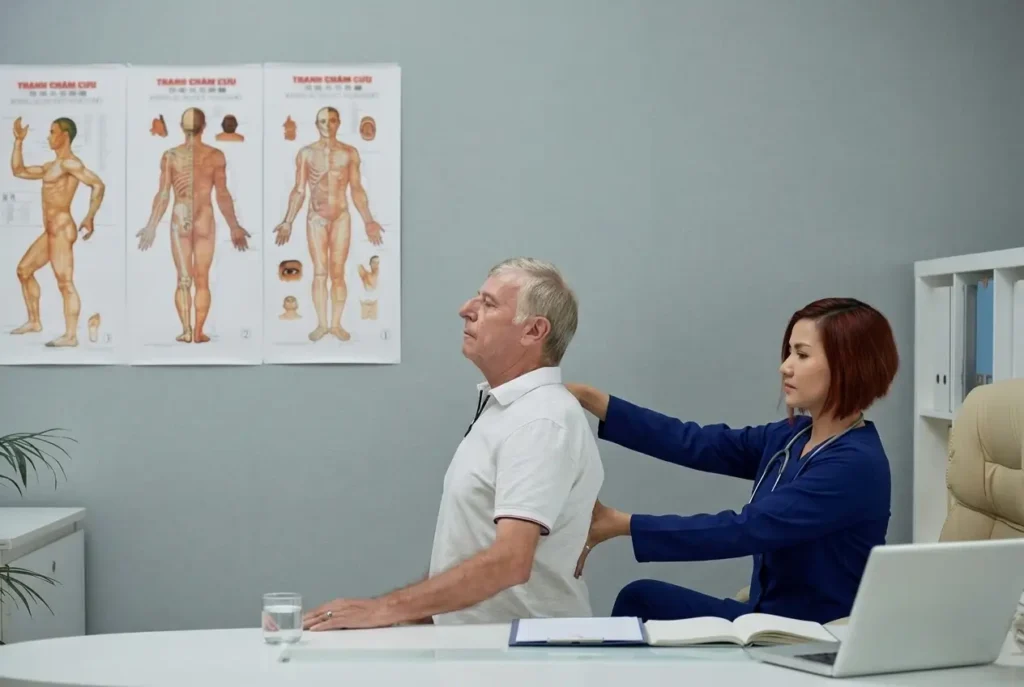
A chiropractor evaluates your lower back pain by reviewing your symptoms, health history, and movement patterns, then builds a care plan around what they find. That plan may include chiropractic adjustments, soft tissue work, movement guidance, or exercise recommendations, depending on what seems appropriate for your specific situation.
Lower back pain is one of the most common reasons people look into chiropractic care, and for good reason. It can limit how you move, how you sleep, and how you get through an ordinary day. But not all lower back pain is the same, and not all of it responds the same way to the same approach. That’s why the starting point for any chiropractor isn’t treatment. It’s an evaluation.
This article walks through what a chiropractor actually does when someone comes in with lower back pain: how they assess it, what care may involve, what a visit typically looks like, and how to think about whether chiropractic care might be worth considering for you.
- Chiropractors begin with an evaluation of symptoms, movement, mobility, and relevant history.
- Chiropractic care is individualized and may involve adjustments, soft tissue techniques, movement guidance, or exercise recommendations.
- Whether chiropractic care may help depends on the individual’s symptoms and circumstances.
- An evaluation can help determine whether chiropractic care is appropriate or whether another type of medical assessment may be more suitable.
- The goal is informed, individualized care rather than a one-size-fits-all treatment approach.
What Does a Chiropractor Do for Lower Back Pain?
At the core, a chiropractor’s job is to understand what’s contributing to your lower back pain before recommending anything. That starts with a conversation about your symptoms: where the pain is, when it started, what makes it better or worse, and whether it radiates anywhere else. From there, a chiropractor typically looks at how your body moves.
This usually means assessing things like:
- How well your lower back and hips bend, rotate, and extend
- Whether certain movements reproduce or worsen your symptoms
- How your posture and daily habits might relate to what you’re feeling
- Any relevant history, like previous injuries, activity levels, or prior treatment
None of this happens in isolation. A chiropractor is trying to build a picture of your specific situation, not apply a one-size-fits-all response. Two people with “lower back pain” can have very different underlying pictures, and the plan that follows should reflect that. This is also where understanding chiropractic care as a broader discipline can help, since the approach to lower back pain sits within a wider framework of evaluating how the musculoskeletal system functions.
The goal of this first step isn’t to jump to a treatment. It’s to figure out whether chiropractic care appears to be a reasonable fit, and if so, what that care should actually target.
What Happens During a Chiropractic Evaluation for Lower Back Pain?
A chiropractic evaluation for lower back pain typically starts with a detailed discussion of your symptoms and history, followed by a hands-on assessment of movement and function in the affected area. The exact process can vary between practitioners, but the underlying goal stays the same: figure out what’s happening before deciding what to do about it.
During the history portion, a chiropractor will usually ask about:
- When the pain began and whether it was linked to a specific event
- Whether the pain is constant, intermittent, or activity-dependent
- Any numbness, tingling, or weakness, which can point toward a different kind of concern
- Your general activity level, work demands, and daily movement patterns
- Prior injuries, treatments, or diagnoses related to your back
From there, the physical portion of the evaluation looks at mobility and function. That can include watching how you bend, checking your range of motion, and identifying movements that either trigger or ease your discomfort. This isn’t about confirming a single cause. It’s about narrowing down what’s contributing to the problem.
One important part of a proper evaluation is recognizing when chiropractic care may not be the right starting point. If symptoms suggest something outside a chiropractor’s scope, such as certain neurological signs or signs that point to a more serious underlying condition, a responsible evaluation should include a recommendation to seek a different type of medical assessment. A good evaluation isn’t just about finding a reason to treat. It’s about determining whether treatment is appropriate at all, and if not, pointing you toward the right next step.
How May Chiropractic Care Help With Lower Back Pain?
A chiropractic evaluation for lower back pain typically starts with a detailed discussion of your symptoms and history, followed by a hands-on assessment of movement and function in the affected area. The exact process can vary between practitioners, but the underlying goal stays the same: figure out what’s happening before deciding what to do about it.
During the history portion, a chiropractor will usually ask about:
- When the pain began and whether it was linked to a specific event
- Whether the pain is constant, intermittent, or activity-dependent
- Any numbness, tingling, or weakness, which can point toward a different kind of concern
- Your general activity level, work demands, and daily movement patterns
- Prior injuries, treatments, or diagnoses related to your back
From there, the physical portion of the evaluation looks at mobility and function. That can include watching how you bend, checking your range of motion, and identifying movements that either trigger or ease your discomfort. This isn’t about confirming a single cause. It’s about narrowing down what’s contributing to the problem.
One important part of a proper evaluation is recognizing when chiropractic care may not be the right starting point. If symptoms suggest something outside a chiropractor’s scope, such as certain neurological signs or signs that point to a more serious underlying condition, a responsible evaluation should include a recommendation to seek a different type of medical assessment. A good evaluation isn’t just about finding a reason to treat. It’s about determining whether treatment is appropriate at all, and if not, pointing you toward the right next step.
Supporting Movement and Function
For some people, lower back discomfort can be associated, at least in part, with how the area moves and functions day to day. Restricted mobility in the spine or surrounding joints may sometimes contribute to a pattern where limited movement and stiffness reinforce each other. Chiropractic care that focuses on supporting movement and function may play a role in addressing that pattern for some individuals, depending on the underlying cause.
This isn’t the same as saying chiropractic care “fixes” the back or resolves the underlying cause outright. It’s better understood as one piece of support aimed at how the area functions, alongside whatever else may be contributing to the pain.
Individualized Care Approach
Because lower back pain has so many possible contributors, from activity patterns to previous injury to general movement habits, care has to be individualized to actually be useful. What helps one person may not be relevant for another, even if the symptoms sound similar on the surface.
This is part of why the evaluation step matters so much. A care plan built without a clear picture of what’s contributing to your specific pain is really just a guess. An evaluation-driven approach at least gives you and the chiropractor a shared starting point.

What May Chiropractic Care for Lower Back Pain Involve?
Chiropractic care for lower back pain can involve a few different components, depending on what the evaluation points to. These commonly include:
- Chiropractic adjustments. Targeted, hands-on techniques applied to specific joints in the spine or surrounding area. If you’re curious about the reasoning and mechanics behind adjustments specifically, that’s covered separately in more detail in why chiropractors use adjustments.
- Soft tissue techniques. Approaches aimed at the muscles and connective tissue around the lower back, which can play a role in stiffness and discomfort.
- Movement guidance. Practical direction on how to move, sit, or carry out daily activities in ways that may reduce strain on the lower back.
- Exercise or activity recommendations. Specific movements or stretches intended to support mobility and function between visits.
Which of these are used, and how they’re combined, depends entirely on what the evaluation shows. Not every plan includes every element, and the emphasis can shift over time as your situation changes.
What Should You Expect When Seeing a Chiropractor for Lower Back Pain?
- Consultation. You’ll talk through your symptoms, history, and what you’re hoping to get out of care, whether that’s less pain, better mobility, or simply understanding what’s going on.
- Evaluation. The chiropractor assesses movement and function in the lower back and surrounding areas, as described earlier.
- Discussion of options. Based on what the evaluation shows, the chiropractor should walk you through what care may involve and why, including any limitations or uncertainties.
- Ongoing communication. As care progresses, there should be room to talk about what’s working, what isn’t, and whether the plan needs to change.
- Reassessment. Depending on your situation, periodic reassessment can help confirm whether the current approach still makes sense or needs adjusting.
A reasonable expectation going in is that care will be tailored to you specifically, and that it may take some back-and-forth to land on what actually helps. It’s fair to ask questions at any point about why a particular approach is being used.
Should You See a Chiropractor for Lower Back Pain?
Seeing a chiropractor for lower back pain may be worth considering if you’re dealing with persistent or recurring discomfort, or if the pain is limiting your movement or daily activities. It’s not a decision that applies the same way to everyone, since the right next step depends heavily on the nature of your symptoms.
Some situations where an evaluation may be useful include:
- Lower back discomfort that’s stuck around for more than a few weeks
- Pain that keeps returning, even if it improves temporarily
- Noticeable limits in bending, twisting, or general mobility
- Discomfort that seems connected to posture, activity, or repetitive movement patterns
That said, chiropractic care isn’t automatically the right starting point for every type of lower back pain. Symptoms like numbness, tingling, significant weakness, unexplained weight loss, fever, or pain following a serious injury are generally considered reasons to seek a different type of medical evaluation first. According to MedlinePlus, low back pain can stem from a wide range of causes, some of which may need to be ruled out or addressed through other types of care.
The safest approach is to treat this as a question worth getting a professional opinion on, rather than trying to self-diagnose whether chiropractic care applies to your situation. An evaluation exists precisely to answer that question.
Is Chiropractic Care Safe for Lower Back Pain?
Chiropractic care can be a reasonable option for some people with lower back pain, but whether it’s appropriate depends on your individual health history and the underlying cause of your symptoms. It isn’t something that can be labeled universally safe or unsafe without that context.
A few things that factor into individual suitability include:
- Your overall health history and any existing medical conditions
- Whether your pain has a clear mechanical or movement-related component, versus signs pointing to something else
- Any prior spinal surgery, fractures, or conditions affecting bone density
- Symptoms that suggest nerve involvement or a more serious underlying issue
This is exactly why a proper evaluation comes before care, not after. A chiropractor should be assessing whether your specific presentation is a good fit for chiropractic care, and should be willing to refer you elsewhere if it isn’t. Organizations like NIAMS note that back pain has many possible causes and that treatment approaches should be matched to the individual, which is consistent with how a responsible chiropractic evaluation should work.
If you have significant health concerns or your pain came on suddenly and severely, it may be worth discussing that with a medical provider as part of deciding on next steps.
Frequently Asked Questions About Chiropractic Care for Lower Back Pain
A chiropractor evaluates your symptoms, health history, and movement patterns, then builds an individualized care plan that may include adjustments, soft tissue work, movement guidance, or exercise recommendations based on what the evaluation shows.
Chiropractic care may help support movement and function for some people with lower back pain, particularly when the discomfort has a mechanical or movement-related component. Results can vary, and it isn't the right fit for every cause of back pain.
A typical visit includes a consultation about your symptoms and goals, a physical evaluation of movement and function, and a discussion of care options based on what's found. Ongoing visits may include reassessment as your situation changes.
Often yes. Your chiropractor may show you specific exercises to strengthen your core and keep your spine supported between visits.
Chiropractors may use adjustments, soft tissue techniques, movement guidance, and exercise or activity recommendations, depending on the individual evaluation. Not every approach applies to every person.
Chiropractic care can be appropriate for some people, but suitability depends on individual health history and the underlying cause of the pain. A proper evaluation helps determine whether it's a reasonable option in your specific case.
Conclusion
What a chiropractor does for lower back pain really comes down to evaluation and individualized care. Rather than applying the same treatment to everyone, the process starts with understanding your symptoms and movement patterns, and builds a plan from there, one that may include adjustments, soft tissue work, movement guidance, or exercise recommendations depending on what fits your situation.
If you’re dealing with persistent or limiting lower back pain, an evaluation can help you understand whether chiropractic care is a reasonable option or whether another type of care makes more sense first. This kind of informed approach matters more broadly for chiropractic care for back problems as well, not just for lower back pain specifically.
For those weighing next steps, Lex 4 Health provides information on back pain chiropractic care options that may be useful when deciding what to explore further.
Each of our team member brings specialized expertise and a patient-centered approach to ensure you receive the highest level of care.